RABBIT ACTIVITY
As regular visitors will have noticed, rabbit activity is causing holes on the hard core tracks and whilst we try and in-fill them, please be aware that the tracks are more uneven than normal as a result of the rabbit diggings.
TRAFFIC REGULATION ORDER – MARSH LANE, HAMPTON IN ARDEN
Please note that with effect from 20th January 2021 Marsh Lane, Hampton in Arden will be gated just north of the railway bridge which accesses the Marsh Lane Nature Reserve car park, to the west of Siden Hill Wood. The gate is going to be locked overnight. Solihull Council have deemed this has become necessary due to frequent problems of anti-social behaviour, fly-tipping and other forms of environmental crime at Bradnocks Marsh.
The closing/opening times will be as follows:
- 1st April – 30th September 9 p.m. to 7 a.m.
- 1st October – 31st March 6 p.m. to 8 a.m.
Link to West Midland Bird Ringing Group: https://www.westmidlandsringinggroup.co.uk/
WORK PARTY DATES 2026
Tuesday 21 April – 6.00pm
Tuesday 19 May – 6.00pm
Tuesday 16 June – 6.00pm
MARSH LANE TRAFFIC ARRANGEMENTS
Starting from March/April 2026, and lasting about 9 months, there will be amended traffic arrangements on the A452/Kenilworth Road. These relate to the alterations that are taking place whereby the dual carriageway will rise over the forthcoming (God only knows when!) HS2 and a new junction with Marsh Lane is being formed. Use of the new section will commence shortly.
At that junction, a roundabout is due to be constructed and, in due course, Marsh Lane will be accessed off that roundabout. In the meantime, some lane closures will take place, but Marsh Lane and the Lorry Park will always be accessible. Signposting will hopefully mention the Nature Reserve but if not follow the signs for the Lorry Park.
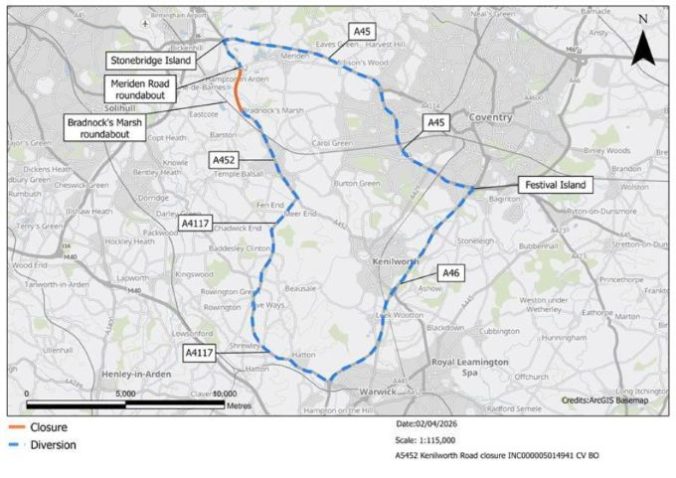
NOTICE OF OVERNIGHT CLOSURES – A452 KENILWORTH ROAD – MONDAY 20th – FRIDAY 24th APRIL 2026
Works will be undertaken to prepare the A452 for the installation of the contraflow on the northbound carriageway of the A452 in mid-May 2026. HS2/BBV will be erecting signage and traffic management on the northbound carriageway as well as carrying out utility works close to Meriden roundabout, working alongside National Grid.
This will result in overnight closures from Monday 20th April to Friday 24th April from 8.00pm until 6.00am, Monday through Thursday. A fully signposted diversion route will be in place, shown below. If the works are completed early, the road will be reopened as soon it is safe to do so.
CORMORANT, RED 9J
A Cormorant, Red 9J, seen on Car Park Pool on 2nd February was ringed as a nestling at Vogelmeer in the coastal dunes south of Bloemendaal, the Netherlands, on 16th June 2025 and was seen there again on 7th August. There have been no other reports.
30th April 2026
Bright, sunny and warm. Moderate south easterly
The run of passage waders continued with the early morning appearance of a Greenshank, first found on Car Park Pool at 06.47. The three Mediterranean Gulls (two adults + second-summer) were still present as were 13 Common Terns, the Oystercatcher brood of three in the Orchid Field and the Lapwing brood of two in the Marsh. A Hobby was seen over the Railway Line, a Red Kite over Siden Hill Wood and a Mistle Thrush in the Car Park Oaks.
29th April 2026
Bright, sunny and warm. Light north easterly
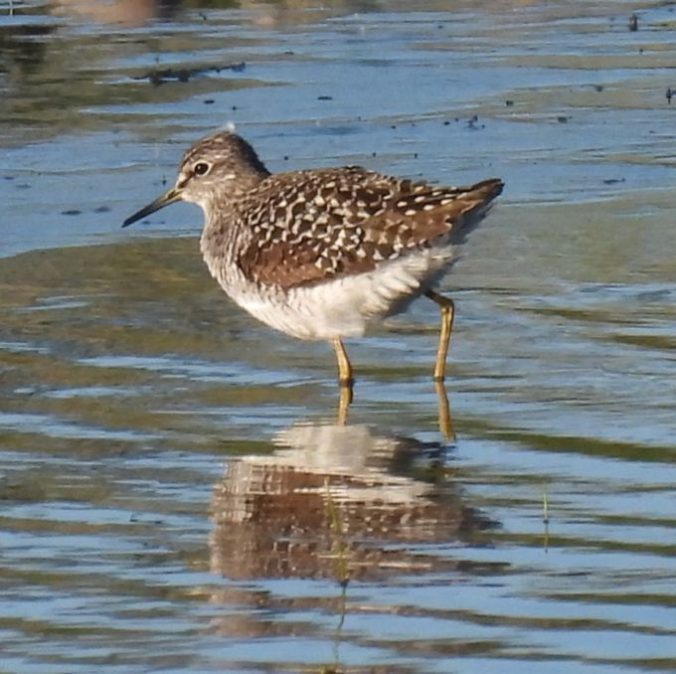
For the second day running, a Wood Sandpiper was present, found on Railway Pool at around 09.00, later relocating to Car Park Pool. The initial assumption was that it was yesterday’s bird but, from a careful comparison of photos, it became clear that it was in fact a different individual.
A comprehensive count around the pools identified: Ringed Plover, 10 Little Ringed Plovers, eight Oystercatchers with two broods (one on Car Park Pool; still three in the Orchid Field), a Lapwing brood (two in the Marsh), two Redshank, two Common Sandpipers, a single Common Snipe (flew over Central Stream and dropped into the Reedbed), 13 Common Terns, three Mediterranean Gulls (two adults + second-summer), three Teal (two male and a female), eight Mute Swans, three Egyptian Geese, three Shelduck, two Goosanders (male and female) and four Little Egrets.
Elsewhere were five Swifts, a single Lesser Whitethroat (in the rough field between Oak Hide and the south west pond), Willow Warbler, Chiffchaff and Garden Warbler (by the entrance gate cottages). Last but by no means least, a female Marsh Harrier which came in over Railway Pool at 12.00 and left to the north east over the Tip Field at around 12.10.
Wood Sandpiper – Photograph by Jamie Hicken
28th April 2026
Overcast and cool initially with some light drizzle, brighter later with sunny spells. Moderate north easterly
The bird of the day was a Wood Sandpiper, a fairly scarce visitor to the Reserve, which was first found on the gravel bar on Railway Pool around 10.15. It quickly moved to Car Park Pool and was present until about midday when it flew off to the north. However, what was presumed to be the same individual, reappeared on Car Park Pool about 45 minutes later and was still present at 20.00.
Others log entries included Ringed Plover, 11 Little Ringed Plover, three Redshank, three Common Sandpipers, eight Oystercatchers now with two broods (three in the Orchid Field and two on Car Park Pool), up to four Egyptian Geese including a brood of three, Canada Geese with a brood of six, three Goosanders (two male and a female), two Great Crested Grebes, three Mediterranean Gulls (two adults and a second-summer). Hirundines were also in evidence with at least 20 Sand Martins, five Swallows and two House Martins.
Later records included Yellow Wagtail on Car Park Pool, and it was noted that one of the Common Terns is ringed (C51).
27th April 2026
Bright, sunny and warm. Light north easterly
A Monday count by Graham Rowling and others found the following:
Around the pools were two Egyptian Geese, three Shelduck, a solitary Teal (female), two Goosanders (male and female), five young Greylag Geese, three Mallard broods (eight on Car Park Pool; four and two on Railway Pool), two young Lapwings (Marsh), three young Oystercatchers (Orchid Field), 12 Common Terns, 10 Little Ringed Plovers, two Great Crested Grebes and two Common Sandpipers,
Away from the pools were Hobby, a single Bullfinch (male) (by Railway Hide), Mistle Thrush (Flood Plain near Patrick Bridge) and two Lesser Whitethroats (Car Park gates and HS2 crossing).
Butterflies and Odonata included: nine Large Red Damselflies, Blue–tailed Damselfly, Azure Damselfly, 12 Orange–tip, 10 Green–veined White, two Small White, Brimstone (female), five Peacock, nine Speckled Wood and four Holly Blue.
Later records were of Willow Warbler, which was singing around the Car Park, and also of half a dozen Swallows and two Sand Martins which went over.
26th April 2026
Sunny spells a.m. but light cloud and overcast p.m. Light north easterly
A Whimbrel, first found on Car Park Pool around 08.40, stayed for around 25 minutes before being flushed by a Corvid and flying off to the north. Little Ringed Plover numbers were down to five with two Redshank and two Common Sandpipers also present. The second-summer Mediterranean Gull was still on Railway Pool and a Lesser Whitethroat was heard calling along the Old Road.
Judging from a recent conversation on the WhatsApp group, a Hare seen in the field next to Car Park Hide would appear to be the site’s first record. They are present in the fields to the west of the Railway Line but haven’t previously been recorded on the Reserve itself.
25th April 2026
Sunny, high cloud, light southerly, remaining dry.
Early records in the log included at least nine Little Ringed Plovers spread between the pools and a Common Sandpiper on Railway Pool. The young Oystercatchers and Lapwing were still present, there were three Redshanks, at least three singing Willow Warblers, a Swallow south, and the second-summer Mediterranean Gull.
The regular Saturday count by Dave Scanlan and Graham Rowling produced the following:
Four Mute Swans, 27 Canada Geese, 34 Greylag Geese + one brood (five on Car Park Pool), 28 Gadwall, 13 Mallard + three broods (eight and one on Car Park Pool, nine on Railway Pool), four Teal (2 male, 2 female), 20 Tufted Duck, two male Goosanders, eight Cormorants, three Little Grebes, two Great Crested Grebes, two Grey Herons, four Moorhens, 17 Coot, eight Oystercatchers and one brood (three in the Orchid Field), 19 Lapwings and one brood (two in the Marsh), a total of 13 Little Ringed Plovers across the pools, four Ringed Plovers, including one sitting in front of Oak Hide, two Redshank, two Common Sandpipers and eight Common Terns.
Gulls included 1550 Black–headed, four Lesser Black–backed and the second-summer Mediterranean. Away from the pools, records were of a female Wheatear by the cattle feeding area and four Cetti’s Warblers (North Causeway Bay, Oak Hide, Top Stream and opposite Car Park Hide).
The weather was good for Butterflies with the following recorded: 26 Orange–tip, eight Green–veined White, two Small White, 10 Peacock, four Speckled Wood, five Holly Blue and a single male Brimstone. Eight Large Red Damselflies were also noted.
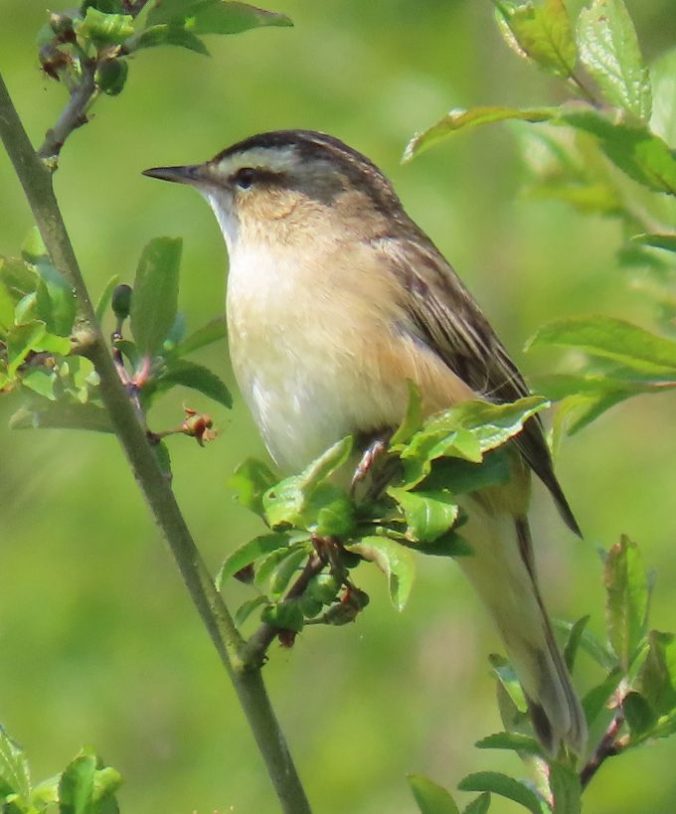
Sedge Warbler – Photograph by Paul Casey
24th April 2026
Sunny, light easterly.
A male Wheatear was at Patrick Bridge this morning and the first Lesser Whitethroat of the year was in song between the Car Park gates and the Top Stream along the Old Road.
Other counts comprised 12 Common Terns, four Egyptian Geese, a Shelduck, one Mallard brood, three Goosanders, still one Lapwing brood and five sitting birds, three Redshanks, six Little Ringed Plovers, nine Oystercatchers and two broods, a pair of Great Crested Grebes, the second-summer Mediterranean Gull and 20 Sand Martins.
23rd April 2026
No records.
22nd April 2026
Fresh easterly, increasingly blustery, sunny.
A male Yellow Wagtail by the old feeder site on the Flood Plain was, like the other two earlier this week, frustratingly brief. It only lingered for 10 minutes. There was also a pair of mating Pied Wagtails there. In the meantime, a little later, a Hobby put everything up from Railway Pool as it flew over and disappeared into Siden Hill Wood, never to reappear.
Garden Warblers were in song by the Entrance Gate cottages and by the Top Gate and there were again three Whitethroats by the HS2 crossing, with another in song by the Entrance Gate cottages.
A male Goosander flew downstream to roost on Car Park Pool in the morning, and by the evening the numbers had increased to seven. On the pools there were at least 10 Little Ringed Plovers, three Redshanks, nine Oystercatchers with two broods, a Lapwing brood of two chicks still in the Marsh, one Gosling brood of five, two Common Sandpipers, the second-summer Mediterranean Gull, and eight Common Terns.
Also, in the evening, the first Swift of the year appeared over Car Park Pool, and a late Green Sandpiper dropped into Car Park Pool at 20.30.
21st April 2026
Sunny spells, fresh north-easterly.
A Mallard group of four ducklings was visible from the Railway Pool hides this morning, and there was a Greylag brood of five goslings on Car Park Pool. Oystercatchers have two broods with one of two young on Car Park Pool, and one of just two still on Railway Pool. Two Lapwing chicks were visible in the Marsh, and there were 11 Little Ringed Plovers, a Redshank and a Common Sandpiper, along with seven Common Terns.
There was still two male House Sparrows around the Car Park, although we suspended feeding there to give the area a rest and, in part, to follow RSPB guidance regarding the transmission of diseases.
A trickle of hirundines included seven House Martins, four Sand Martins and three Swallows.
A work party was attended by three in the evening, and they mowed along the paths and tidied up around the Back Gate. Thanks to those that attended.
20th April 2026
Sunny, light north-easterly.
Two Avocets were back on Car Park Pool until 07.45 this morning, but they quickly moved off and a Dunlin, the first of the spring, was a new arrival on Railway Pool.
A late Snipe was on the far side of Car Park Pool from the hide, and there was a male White Wagtail briefly on the islands.
The first Damselflies of the year were seen with four Large-red present around the Dragonfly Pond, along with 15 Orange-tips, a male Brimstone, two Peacocks, three Green-veined Whites and two Speckled Woods. Other birds included at least three Common Whitethroats chasing each other around the HS2 crossing. Little Ringed Plovers were back up to 11 and there were three Redshanks and a Common Sandpiper. Six Common Terns included a pair in feeding ritual.
19th April 2026
Sunny, cool start, light westerly.
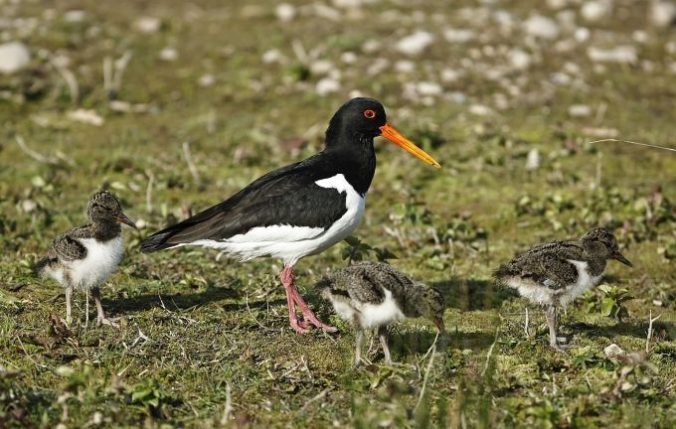
The first Garden Warbler of the spring was in song by the Entrance Gate cottages early morning, but later in the day it had moved up towards the Car Park. There were two Egyptian Geese on the Flood Plain, a drake Goosander on Car Park Pool, still three Oystercatcher chicks in front of Oak Hide and at least two Lapwing chicks in the Marsh, six Common Terns, the second-summer Mediterranean Gull and two Common Sandpipers.
Oystercatcher with chicks – Photograph by Steve Pattison
18th April 2026
Sunny spells, fresh south-westerly.
The family party of Lapwings hatched out on the large island have sensibly moved to the Marsh where three chicks were visible this morning. An impressive 11 Little Ringed Plovers joined three Common Sandpipers and three Redshank on the pools, and there were nine Oystercatchers this morning, with a family party of three chicks still on Railway Pool.
The second-summer Mediterranean Gull was amongst 2,000 Black-heads and there was a single Herring Gull, along with six Lesser Black-backs.
Graham and Dave’s other counts were four Mute Swans, 24 Canadas, 16 Greylags, two Shelducks, five Shoveler, 27 Gadwall, 10 Mallard, three Teal, 23 Tufteds, 16 Cormorants, two Little Grebes, a Heron, a Little Egret, three Moorhen, 20 Coot and two Egyptian Geese.
Despite the fresh wind 26 Orange-tips were counted, along with three Peacocks, two Speckled Woods and three Holly Blues.
17th April 2026
Overcast, fresh southerly.
The two Avocets were back on Car Park Pool this morning but did not linger for that long. Eight Oystercatchers were spread between the pools, and there was a single chick visible with one of the pairs on Railway Pool.
In the meantime, the Lapwings to the left of Oak Hide, that had been nesting on the point of the largest island, have hatched at least one chick and a second-summer Mediterranean Gull joined the Black-headed Gulls in front of Railway Hide.
The first Yellow Wagtails of the year were frustratingly brief visitors to the Flood Plain, with a male at 10.43 for four minutes, and a female at 11.10. There was also a male Wheatear there.
Other quality came in the shape of a Red Kite over the Reserve, 10 Little Ringed Plovers, two Redshank, two Common Sandpipers, 19 Cormorants, a Red-legged Partridge by the Lorry Park, five Common Terns, four Shelduck, a drake Goosander and a trickle of hirundines with 15 Sand Martins, two House Martins and two Swallows.
16th April 2026
Initially overcast with heavy showers, cool brisk westerly, sunny intervals.
Continuing the good wader passage, a pair of Avocets were present on Car Park Pool at first light, and were present until early afternoon at least, perhaps the pair from the 8th.
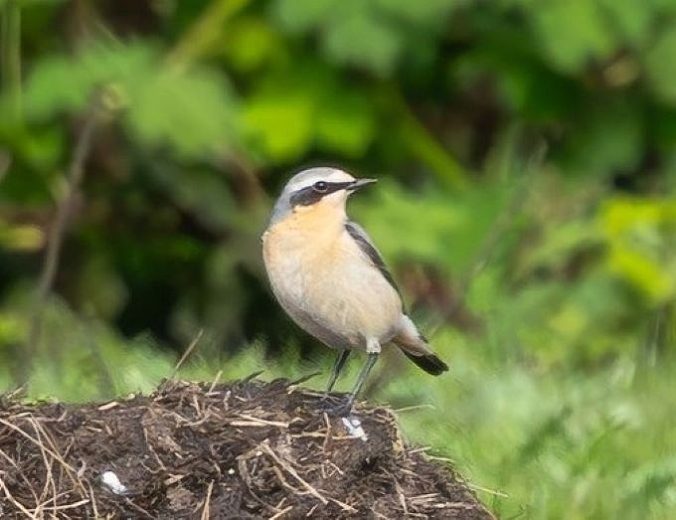
There were two male Wheatears on the Flood Plain, presumably one from yesterday, and a second one which appeared briefly, but moved on quickly. There was also a Grey Wagtail and four Pied Wagtails present. The second-summer Mediterranean Gull was present briefly on Railway Pool, a Water Rail called from the south end of the Reedbed, and there was a steady trickle of hirundines north, House Martins principally, but with a few Sand Martins. At least a dozen House Martins had moved through by midday, with four to five Sand Martins amongst them. A pair of Nuthatches were vocal in the Back Gate Copse, and other birds included a Raven over, two Common Sandpipers, four Little Ringed Plovers, and a pair of Goosanders. Whitethroats were in song by the entrance gate and Patrick Bridge.
Wheatear – Photograph by Alastair Robertson
15th April 2026
Some sunny intervals, overcast, damp start, rain later, breezy southerly.
A new male Wheatear was seen on the Flood Plain, bringing the count to at least 10 birds. It was joined by a Grey Wagtail on the old feeder site, viewable from the first gate north of the Dragonfly Pond on the Old Road. Three Skylarks were in the air opposite this, with probably a fourth singing over the Tip Field.
A second-summer Mediterranean Gull joined the Black-headed Gulls on Railway Pool, there were at least four each of Willow Warbler and Sedge Warbler in song, plus two Reed Warblers and at least six Cetti’s Warblers.
On the pools there were five Shelducks, five Goosanders, three Little Ringed Plovers, two Common Sandpipers and a pair of Common Terns, which put in a brief appearance on Car Park Pool, with one bird fish carrying.
Later in day a late Common Gull passed through, a Raven went over, a pair of Linnets were collecting nesting material from the Tip Field and taking it east towards Berkswell, and a Mistle Thrush went south over the pools.
14th April 2026
Sunny spells, fresh southerly.
Today’s quality came in the shape of a winter-plumage Bar-tailed Godwit which was found on Railway Pool by Graham Rowling at 10.45, but unfortunately only lingered for 15 minutes before departing to the south. This would appear to be the 14th record for the Reserve and the first since 24th April 2022.
A Red-legged Partridge was an unusual find, on the Flood Plain, and a new Whitethroat was singing from the HS2 crossing. Otherwise, birds were similar to the previous few days.
13th April 2026
Sunny spells, still.
A pair of Red Kites were seen around and to the north of Patrick Farm this morning, and there were also five Buzzards in the air.
Other birds included 18 Mallards, 40 Tufteds, a male Goosander, six Oystercatchers, six Little Ringed Plovers, two Redshank, one Common Sandpiper, two Great Crested Grebes, 12 Shoveler, 15 Orange-tips, two Green-veined Whites and a Peacock.
12th April 2026
Brisk south-westerly, showers.
The best bird of the day was a Whimbrel which spent much of the morning roosting on Car Park Pool, but a male Mandarin, through to the south, was also noteworthy, along with two late Common Gulls. The showers brought down hirundines with at least 15 Sand Martins, five House Martins and six Swallows.
On the Flood Plain there was initially one male Wheatear, possibly yesterday’s bird, but by lunchtime a second one had joined the first. There were also two Egyptian Geese on the Flood Plain. A Common Tern put in a brief appearance, and there were at least four Shelducks and three Goosanders, with the two Snipe continuing to linger.
11th April 2026
A male Wheatear was present on the Flood Plain, with this spring being a standout year for this species. After one in March, there have now been eight so far this year and, aside from two females, all the others have been males. If there are more to come, it seems more likely that they will start to become later females.
A brisk south-westerly was conducive to some hirundine passage, with at least 20 Swallows, one Sand Martin and two House Martins, with up to three Swallows seen at Patrick Farm, and a pair back by the cottages. Graham and Dave’s other counts were five Mute Swans, 15 Canadas, 31 Greylags, two Egyptian Geese, three Shelducks, 12 Shoveler, 12 Gadwall, nine Mallard, five Teal, 29 Tufteds, two pairs of Goosanders, nine Cormorants, two Great Crested Grebes, four Little Grebes, two Herons, six Little Egrets, 16 Coot, six Moorhen, seven Oystercatchers, seven Little Ringed Plovers, 11 Lapwings and still three chicks, one Common Sandpiper, four Redshank, two Snipe, 1,300 Black-headed Gulls, one Herring Gull and six Lesser Black-backed Gulls.
Raptors included a Kestrel (scarcely recorded recently), initially at Patrick Farm and then over the Tip Field, a single Sparrowhawk and at least two Buzzards.
Lastly, despite the brisk weather, there were at least 12 Orange-tips and three Green-veined Whites on the wing.
10th April 2026
Sunny, fresh south-westerly.
One of the pairs of Lapwings on Railway Pool has hatched three chicks, but I don’t hold out much hope that they will last long with marauding gulls about and no young Black-heads to feast on.
Warblers are beginning to show themselves in good numbers, with at least eight Blackcaps this morning, three Willow Warblers, two Whitethroats, at least one Sedge Warbler and two Reed Warblers.
A trickle of hirundines included five Swallows, four Sand Martins, and two House Martins, and there was a Common Tern briefly, but they are slow to arrive.
Waders included four Little Ringed Plovers, eight Oystercatchers, about 10 Lapwings, four Redshank, two Snipe and a Common Sandpiper.
9th April 2026
No records.
8th April 2026
Sunny, still.
A pair of Avocets were present on the Car Park Pool islands until 11.30 and the first Whitethroat was in song behind Railway Hide. Three Willow Warblers included birds in the Crop Field Oaks, and two either side of the new HS2 permanent settlement pond, north of the Dragonfly Pool. Two Sedge Warblers were also heard, whilst a Red Kite went over.
The warm weather was ideal for butterflies with at least 21 Orange-tips seen, along with three Peacocks, two male Brimstones, two Speckled Woods, a Holly Blue and two Green-veined Whites.
At least five Cetti’s Warblers were heard, but there are possibly as many as seven, depending on the overlap of territories.
Goosanders continued to linger with three birds this morning, and there were still 10 Teal on site. Four sitting Lapwings included a pair on Car Park Pool and three on Railway Pool.
7th April 2026
Sunny, light south-easterly.
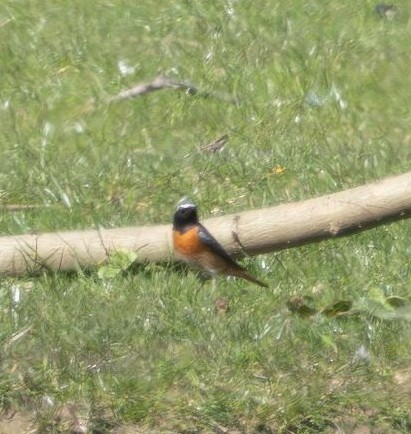
A good array of records today, with the highlight being a male Redstart found in the favoured spot, the Flood Plain hawthorns. A Curlew, presumably the same bird as yesterday, flew over south at 11.30, whilst a Swallow and seven Sand Martins flew north.
Willow Warbler numbers increased to three and Blackcap to five, and Sedge Warblers included singing birds in the Reedbed and the North Causeway Bay.
Meantime, a Grey Wagtail was present on the Flood Plain to replace yesterday’s Wheatears. Other counts included two Shelduck, an Egyptian Goose, 11 Mallard, 27 Gadwall, two female Goosanders, 12 Oystercatchers, four Little Ringed Plovers, two Redshank, a Common Sandpiper and one Great Crested Grebe.
Orange-tips were well in evidence, with at least 17 counted today, along with five Peacocks, a Holly Blue and a Green-veined White.
Redstart – Photograph by Alastair Robertson
6th April 2026
Sunny spells, light southerly.
A record count of five Wheatears was a great sighting on the sparse grass on the Flood Plain, with three males and two females principally visible from the first metal gate north of the Dragonfly Pond looking west. A Willow Warbler was in song in the Crop Fields Oaks and there were three singing Blackcaps. A Red Kite and a Raven went over, and a Curlew was a notable arrival on Car Park Pool but didn’t linger. A Common Sandpiper was present on Railway Pool early morning only.
Other counts today included two Shelduck, 11 Shoveler, 35 Tufteds, 10 Cormorants, three Goosanders, six Little Ringed Plovers, four Redshank, three Oystercatchers, a drumming Great Spotted Woodpecker in the crop Oaks; butterflies extended to four male Orange-tips and a Green-veined White.
5th April 2026
Bright, but breezy from the south-west.
The first decent numbers of hirundines this morning comprised 35 Sand Martins and the first Swallow of the year, all no doubt a consequence of the brisk wind. Six Little Ringed Plovers were present on Car Park Pool and there was a Willow Warbler in song in the Crop Oaks where it has been vocal now since the 3rd. Lastly, there were six Goosanders on Car Park Pool.
4th April 2026
Overcast with drizzle, brightening to sunny spells, fresh southerly.
A full count from Graham and Dave today was as follows: four Mute Swans, 21 Canadas, 14 Greylag, two Shelduck, six Shoveler, 21 Gadwall, nine Mallard, two pairs of Teal, 24 Tufteds, three female Goosanders, nine Cormorants, three Little Grebes, three Herons, three Little Egrets, two Great Crested Grebes, seven Moorhen, 16 Coot, nine Oystercatchers, 14 Lapwing, seven Little Ringed Plovers, two Redshank, 1,085 Black-headed Gulls, three Herring Gulls, six Lesser Black-backed Gulls and 16 Fieldfares north during the morning. Yesterday’s Willow Warbler was in the Crop Fields Oaks, and seven Linnets flew over Patrick Farm going east.
Four male Orange-tips were seen, along with a Comma.
3rd April 2026
Overcast, brisk south-westerly.
The first Willow Warbler of the year was singing by the Car Park, and a mix of migrants saw six Sand Martins feeding over the pools, four Redwings over, and a lingering pair of Wigeon and Goosanders.
Other birds making the log were three Shelduck, a female Pintail, two Great Crested Grebes, three Little Grebes, seven Moorhen, nine Oystercatchers, six Little Ringed Plovers and four Redshank.
2nd April 2026
Warm with a cool wind.
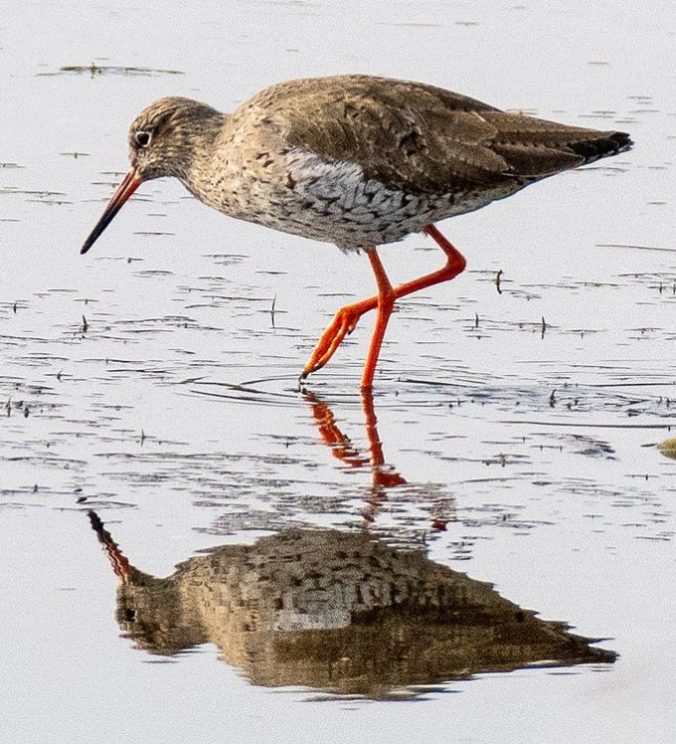
The two adult Mediterranean Gulls were present again on Railway Pool and waders included three Redshank and two Little Ringed Plovers. The female Pintail was still present, as was the male Wheatear from yesterday.
Later in the day a Black-tailed Godwit, in winter plumage, was reported from the doughnut pool in front of Railway Hide, and butterflies on the wing included an Orange-tip and a Peacock.
Redshank – Photograph by Graham Dyer
1st April 2026
Overcast, light south-westerly.
An adult Kittiwake from 09.40 – 09.45 on Railway Pool was a very pleasant surprise this morning, and follows other birds noted over the last few days moving through the Midlands. There were also two adult Mediterranean Gulls on Railway Pool.
A male Wheatear was briefly on the Flood Plain by the first gate north of the Dragonfly Pond, and there was also a Sand Martin present briefly. Two Red Kites went over, and other birds noted were three Shelduck, the female Pintail, nine Oystercatchers, three Redshank, four Little Ringed Plovers, five Little Egrets, three Herons and an Egyptian Goose.
In the late afternoon there were eight Goosanders on Car Park Pool (four males and four females) and two pairs of Wigeon.
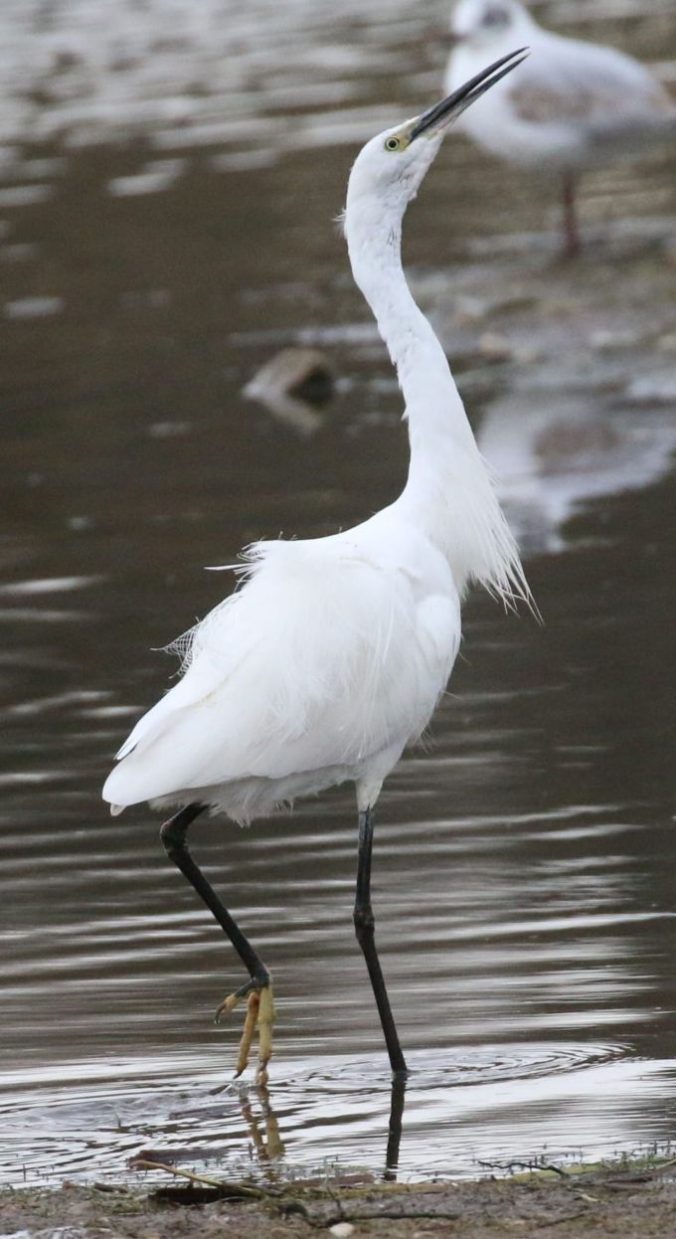
Little Egret – Photograph by Chris Heyworth