
RABBIT ACTIVITY
As regular visitors will have noticed, rabbit activity is causing holes on the hard core tracks and whilst we try and in-fill them, please be aware that the tracks are more uneven than normal as a result of the rabbit diggings.
TRAFFIC REGULATION ORDER – MARSH LANE, HAMPTON IN ARDEN
Please note that with effect from 20th January 2021 Marsh Lane, Hampton in Arden will be gated just north of the railway bridge which accesses the Marsh Lane Nature Reserve car park, to the west of Siden Hill Wood. The gate is going to be locked overnight. Solihull Council have deemed this has become necessary due to frequent problems of anti-social behaviour, fly-tipping and other forms of environmental crime at Bradnocks Marsh.
The closing/opening times will be as follows:
- 1st April – 30th September 9 p.m. to 7 a.m.
- 1st October – 31st March 6 p.m. to 8 a.m.
Link to West Midland Bird Ringing Group: https://www.westmidlandsringinggroup.co.uk/
WORK PARTY DATES 2026
Wednesday 9th September – 6.00pm
Saturday 3rd October – 2.00pm
Saturday 7th November – 2.00pm
Saturday 12th December – 2.00pm (Please note change of date)
MARSH LANE TRAFFIC ARRANGEMENTS
Starting from March/April 2026, and lasting about 9 months, there will be amended traffic arrangements on the A452/Kenilworth Road. These relate to the alterations that are taking place whereby the dual carriageway will rise over the forthcoming (God only knows when!) HS2 and a new junction with Marsh Lane is being formed. Use of the new section will commence shortly.
At that junction, a roundabout is due to be constructed and, in due course, Marsh Lane will be accessed off that roundabout. In the meantime, some lane closures will take place, but Marsh Lane and the Lorry Park will always be accessible. Signposting will hopefully mention the Nature Reserve but if not follow the signs for the Lorry Park.
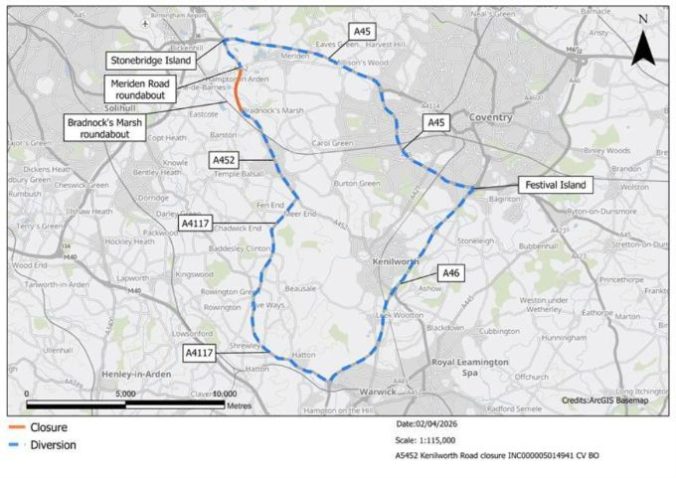
NOTIFICATION OF FORTHCOMING ROAD CLOSURE – A452 KENILWORTH ROAD
Following the installation of the contraflow on the new southbound carriageway of the A452, work is to be undertaken to install streetlights and signage, clear vegetation and undertake surveys between Bradnock’s Marsh and Meriden roundabout.
On the weekends of Friday 2 October to Monday 5 October and Friday 9 October to Monday 12 October the road will close at 10.00pm on Friday night and reopen at 6.00am on Monday morning.
A fully signposted diversion route will be in place.
Additionally, the during the night of Saturday 10 October, from 10.00pm (until 6.00am on Sunday 11 October), the road closure will be extended to Park Lane roundabout so that repairs to the carriageway of Bradnock’s Marsh roundabout can be carried out.
30th September 2026
Overcast, showers, brightening to sunny spells, blustery south-westerly.
The adult Brent Goose was present again, though it clearly spends some time across the railway towards Bradnocks Marsh. Also on site was the eclipse drake Pintail, the juvenile Black-tailed Godwit, singles of Dunlin and Common Sandpiper, two Green Sandpipers (one on the pools and one at Patrick Bridge), and increase in Wigeon again to 64 and three Stonechats on the Flood Plain. A Grey Wagtail was also on the margins of Railway Pool.
29th September 2026
Overcast, light south-easterly.
A hint of east in the wind was good enough to bring in a juvenile Black-tailed Godwit this morning which favoured the far side of Railway Pool, although it wasn’t immediately obvious in the evening. The Dunlin remained, as did the Pintail but there was no sign of the Brent Goose today.
In the evening, two Grey Wagtails, a Green Sandpiper and a Common Sandpiper were all present around the pool margins and a first-year Hobby was using the central streamline as a point to sally out for Migrant Hawkers that had emerged in the evening. Kestrel, Peregrine and Buzzard were all on view during the day, a Chiffchaff and six Stock Doves were present in the Car Park and two Water Rails called from the Reedbed in the evening.
28th September 2026
Sunny spells, still.
A further increase in Wigeon saw 40 on site today, joining the eclipse drake Pintail, Dark-bellied Brent and Dunlin. In the morning there was a single Whinchat on Railway Pool, but in the afternoon a second one joined it, whilst a female Stonechat was present north on the Flood Plain fences. Three Skylarks and 20 Meadow Pipits were present around the new HS2 pond along the Old Road, whilst a Raven went over.
Three Kingfishers were flying around the Reedbed Pool in the afternoon, perhaps a late brood. A Curlew also appeared for about five minutes on the Car Park Pool islands but did not linger.
27th September 2026
Warm with occasional showers and sunny intervals.
The weather remains remarkedly mild and warm for the time of year, despite occasional showers, but birds today were mostly a repetition of the last few days with the Whinchat still present, along with the Brent Goose, Dunlin and Pintail. A first-winter Common Gull over Car Park Pool was the first of the autumn and other bits and pieces included four Skylarks at the HS2 works, a Raven over, a Common Sandpiper on Railway Pool and a steady increase in Wigeon numbers with 30 today.
26th September 2026
Sunny spells, light south-westerly.
Yesterday evening’s Dunlin was still present this morning, and some passage included 28 Skylark over the HS2 area with eight Meadow Pipits, a Swallow and a Grey Wagtail.
Both a male and a female Stonechat were present around the margins of Railway Pool, and the Dark-bellied Brent Goose continued its stay.
Just one eclipse drake Pintail was on site, and other wildfowl of note included nine Mutes, 130 Canadas, 570 Greylags, four Egyptian Geese, 38 Shoveler, seven Gadwall, 22 Wigeon, 28 Mallard, 76 Teal, three drake Pochard, six Tufteds; there were also 13 Cormorants, 10 Little Grebes, nine Herons, five Little Egrets, two Great White Egrets, 18 Moorhen, 26 Coot, 62 Lapwing and three Snipe. In the late morning, a juvenile Whinchat appeared on the Railway Pool islands from Railway Hide, favouring the unstrimmed thistle tops. Both Green Woodpecker and Grey Wagtail were seen in the late morning and, in the afternoon, a Red Kite went over Railway Pool and a Peregrine was hunting wildfowl on the far bank of Car Park Pool.
25th September 2026
Sunny spells after early mist, light westerly.
Today’s highlight was a Curlew Sandpiper which, frustratingly, flew around Car Park Pool for a few minutes at 11.40 before flying off high south-west and not doing the decent thing and landing so a few people could see it! It was the first record since 11th October 2012 and is an indication of how scarce this species is at the Reserve, and in some ways, in the West Midlands as a whole.
Two eclipse drake Pintail were joined by three drake Pochard, two Egyptian Geese, 16 Wigeon and the Dark-bellied Brent.
A late Reed Warbler was seen in the Reedbed, 12 Meadow Pipits were feeding on the Old Road behind the new settlement pond, there was a female Stonechat on the HS2 Flood Plain fences, and in the evening, a Dunlin arrived on Car Park Pool. Two Swallows fed over the Reedbed in the evening and five Little Egrets and two Great White Egrets, together with five Snipe, were other birds of interest in the log.
24th September 2026
Sunny periods, cool south-easterly, warming as the afternoon went on.
The Grey Phalarope must have departed overnight but the Brent Goose was back on Car Park Pool grazing the islands before falling asleep about 10.30. In addition, an eclipse drake Pintail was new in, preferring the channel between the main island and the new one revealed by the low water level to the west.
Singles of Green and Common Sandpiper were present on the pool margins, with at least six Snipe in front of Oak Hide.
Whilst watching the Pintail, two Great White Egrets were feeding the margins and then four additional birds flew in, creating a record count.
A Kestrel could be seen north of Patrick Farm, being harassed by Jackdaws, and at 10.30 two juvenile Swallows dropped in to feed over the central streamline. Hirundine passage has so far been poor. At 13.25 a Curlew dropped into the Car Park Pool islands.
In the afternoon raptors included two Buzzards and singles of Red Kite, Hobby and Peregrine. A Clouded Yellow butterfly was nectaring in front of Car Park Hide and showing well.
23rd September 2026
Sunny intervals.
It is pleasing to report that the Grey Phalarope is still present today, along with the Dark-bellied Brent Goose (believed to be the fifth record, but the first since 17th November 2014).
In the morning additional sightings in the sunny weather, but with the fresh north-westerly, were four Egyptian Geese, 17 Wigeon, three Great White Egrets, 13 Lesser Black-backed Gulls, two Snipe, a Water Rail heard from the Reedbed, a Red Kite and Peregrine over, and a trickle of overhead passage which included six Swallows, a single House Martin, two Skylarks and two Meadow Pipits. Both Painted Lady and Comma butterflies were seen in the more sheltered areas.
In the afternoon, there was no immediate sign of the Brent Goose, with all the geese spread out on the Flood Plain, and many viewable into the sun, but there is every chance it is still present.
22nd September 2026
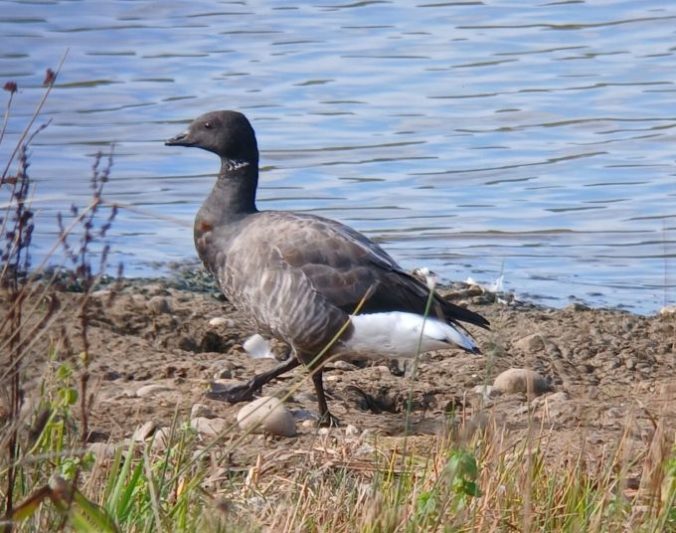
A good day today! The juvenile Grey Phalarope was present for its third day, with other quality in the shape of a Dark-bellied Brent Goose, and a Cattle Egret.
Two of yesterday’s Stonechats remained, along with a juvenile Grey Wagtail, three Green Sandpipers, two Snipe and the adult Greater Black-backed Gull. In the afternoon a Hobby flew through, but there was no sign of the Cattle Egret.
Dark-bellied Brent Goose – Photograph by Graham Rowling
21st September 2026
Sunny and still.
Surprisingly, the Grey Phalarope was present again all day at the north end of Car Park Pool.
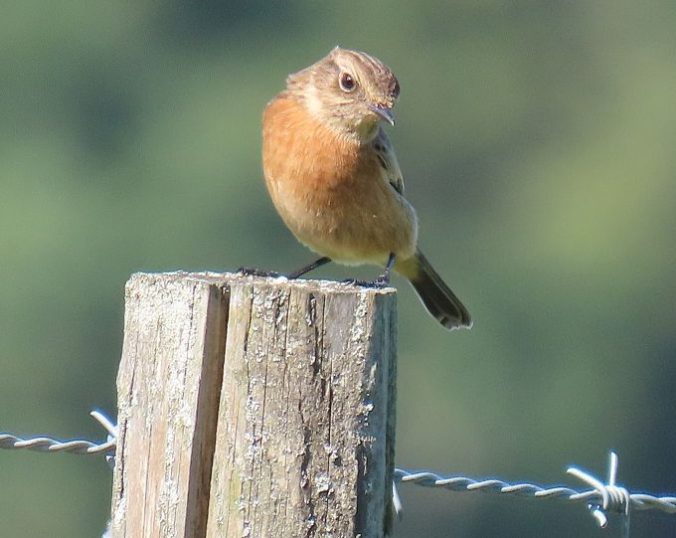
Some passage included the first returning Stonechats of the year, with a male and two females around the Car Park Pool. Forty Meadow Pipits included seven over, three on the Car Park Pool margins, and 30 over the Dragonfly Pond.
There was a Clouded Yellow on the Flood Plain by the HS2 crossing, and three Small Copper butterflies by the Dragonfly Pond.
Other birds making the log were two Great White Egrets, four Wigeon, nine Little Grebes, two Snipe, a Green Sandpiper and a Kestrel.
Stonechat – Photograph by Paul Casey
20th September 2026
Sunny spells, fresh westerly.
The day’s undoubted highlight, and the Reserve’s fourth Grey Phalarope, was found by Steve Taylor in the north-east corner of Car Park Pool this morning. Despite being hassled by Black-headed Gulls it was present all day
The adult Great-blacked Gull roosted on the Car Park Pool islands, there were again two Green Sandpipers present along with three Little Egrets, a juvenile Grey Wagtail, whilst overhead there was just a single Skylark and two Meadow Pipits. A Clouded Yellow was seen in front of Oak Hide, and a Fox had made its way across to the Car Park islands at dawn before swimming back to the far bank.
A ringing session was held in the Back Gate Copse and two nets were set and the following birds caught, all juveniles: 13 Blackcaps, three Chiffchaffs, two Cetti’s Warblers (a male and a female), two Robins, two Great Tits and a Blue Tit.
Grey Phalarope – Photograph by Steve Pattison
19th September 2026
Overcast, blustery, southerly, occasional light drizzle.
The full count, care of Graham Rowling today, was as follows: 16 Mute Swans, 244 Canadas, three Canada/Greylag hybrids, 551 Greylags, four Egyptian Geese, 39 Shoveler, 23 Gadwall, six Wigeon, 51 Mallard, 75 Teal, five Tufted Ducks, 22 Cormorants, eight Little Grebes, three Great White Egrets, one Little Egret, 10 Herons, 15 Moorhen, 19 Coot, a Water Rail calling from the Reedbed, 61 Lapwing, two Snipe, 177 Black-headed Gulls, nine Lesser Black-backed Gulls, whilst overhead 12 House Martins and five Skylark moved south. Lastly, there was a Kingfisher hunting on the Reedbed pool.
18th September 2026
Overcast, fresh south-westerly.
Nineteen House Martins, a single Sand Martin and six Swallows, along with the first three Meadow Pipits of the autumn, went south. The Grey Wagtail was again feeding in front of Railway Hide and waders, beyond Lapwings, included seven Snipe and two Green Sandpipers.
17th September 2026
South-west breeze, showery early on, sunny spells.
Four Swallows, ten House and six Sand Martins went through this morning, and there was a juvenile female and an adult male Kestrel hunting around the Reserve, whilst a Red Kite went north over Siden Hill Wood. A Small Copper was seen by the path to Car Park Hide in the late morning.
16th September 2026
Sunny spells, fresh north-westerly.
The first of the autumn Skylark movement commenced with four over Car Park Pool at 09.00. A Grey Wagtail and a Green Sandpiper were feeding on the margins of Railway Pool and other records making the log were three Great White Egrets, 18 Herons, four Little Egrets, six Wigeon, three Egyptian Geese and four Willow Emeralds.
15th September 2026
Sunny spells, fresh westerly.
An impressive 14 female/immature Goosanders were present on Railway Pool this morning, which were presumably a combination of two or three family broods. Only 12 Red-heads were still present at midday.
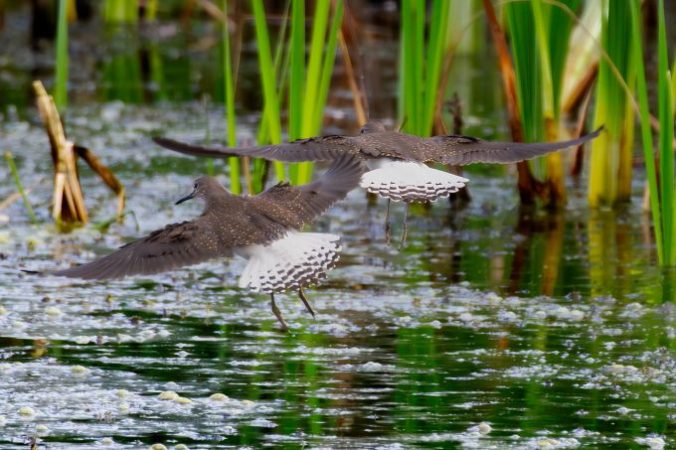
A second-summer Yellow-legged Gull was present with at least nine Lesser Black-backs on Car Park Pool in the late afternoon, and two very vocal Green Sandpipers were feeding together and calling all the time below Oak Hide, just after 18.00.
Eight Willow Emerald Damselflies were present in various places around the Reserve, including one by the Back Gate, five on the path to the ringers’ bridge by the Central Stream, and two along the Concrete Road.
Other bits and pieces comprised seven Wigeon, 129 Teal, three Great White Egrets, four Little Egrets, 12 Herons, a single Egyptian Goose, a Water Rail, the adult Greater Black-backed Gull, an over-flying Collared Dove, and seven Stock Doves together in the evening which dropped in to drink on Car Park Pool.
Green Sandpipers – Photograph by Stef Fraczek
14th September 2026
Overcast with drizzle, brightening to sunny spells, light southerly.
A Reed Warbler was present in the North Causeway Bay, and other migrants included a bright juvenile Willow Warbler along the Old Road past the HS2 workings, whilst overhead, 11 Sand Martins and two Swallows headed south. Also over the Old Road was a single Kestrel and two Ravens, whilst around the Pools were four Wigeon, 94 Teal, nine Little Grebes, seven Snipe, a Green Sandpiper, 29 Cormorants, 14 Herons, five Little Egrets, three Great White Egrets and 138 Mallard.
13th September 2026
No records.
12th September 2026
Sunny spells, fresh south-westerly.
Wildfowl numbers are hugely variable on a day-by-day basis, but there were again over 1,200 Canadas and Greylags, along with 27 Mute Swans, seven Egyptian Geese, 45 Shoveler, 13 Gadwall, four Wigeon, 110 Mallard, 95 Teal and six Tufteds. The Heron count reached an impressive 16, along with three Little Egrets, and two Great White Egrets. A Water Rail was heard from the Reedbed, and on the insect front, there were two Willow Emeralds and two Small Coppers.
11th September 2026
Great White Egret numbers were up to five today, and the second Spotted Flycatcher of the autumn was one seen briefly along the Old Road between the Car Park and the Dragonfly Pond. There were also two Nuthatches and a pair of Linnets along the Old Road towards the cottages.
A juvenile Great Crested Grebe was new in, and of the waders, a juvenile Little Ringed Plover and three Green Sandpipers were also present.
10th September 2026
Windy, dull.
There was a Green Sandpiper in front of Oak Hide, Peregrine and Kestrel over, two Great White Egrets and two Egyptian Geese, whilst the adult Greater Black-backed Gull roosted. Three Kestrels circled together over the Flood Plain in the late morning.
9th September 2026
Overcast, fresh north-westerly.
The Spoonbill departed overnight and there was not much change in bird species with a juvenile Little Ringed Plover perhaps being the most interesting of the remaining birds in the last few days. Eight House Martins, five Swallows and two Sand Martins continued the dribble of hirundines heading south.
Another disappointing turnout for the work party saw just three people start the strimming of the Railway Pool islands. With decreasing amount of light, we only had about two hours but strimmed all of the island in front of Oak Hide, most of the largest island, known as Tern Island, towards the far side of Railway Pool, and opened up visibility from Oak Hide on the larger island close to the shoreline. Thank you to John Hunt and Paul Roper for attending.
I do hope that when we revert to the Saturday afternoon work parties, we will have more people attending. The Reserve depends on these work parties to maintain what you all appreciate.
Late evenings are a lovely time at the Reserve as the wildfowl are flighting in to roost, with much of the flighting taking place either at dusk or even in the dark.
8th September 2026
Overcast, rain until mid-morning, light south-westerly, clearing later.
The adult Spoonbill remained on site all day, pleasing a steady trickle of appreciative members.
Waders extended to singles of Common Sandpiper, Green Sandpiper and Little Ringed Plover and, in addition, there were eight Snipe, two Kingfishers, three Great White Egrets, 69 Lapwing, a further increase in Mute Swans to 37, four Wigeon, five Egyptian Geese and six Little Grebes. Hirundine passage continued with 16 House Martins, two Swallows and nine Sand Martins.
7th September 2026
Warm and sunny.
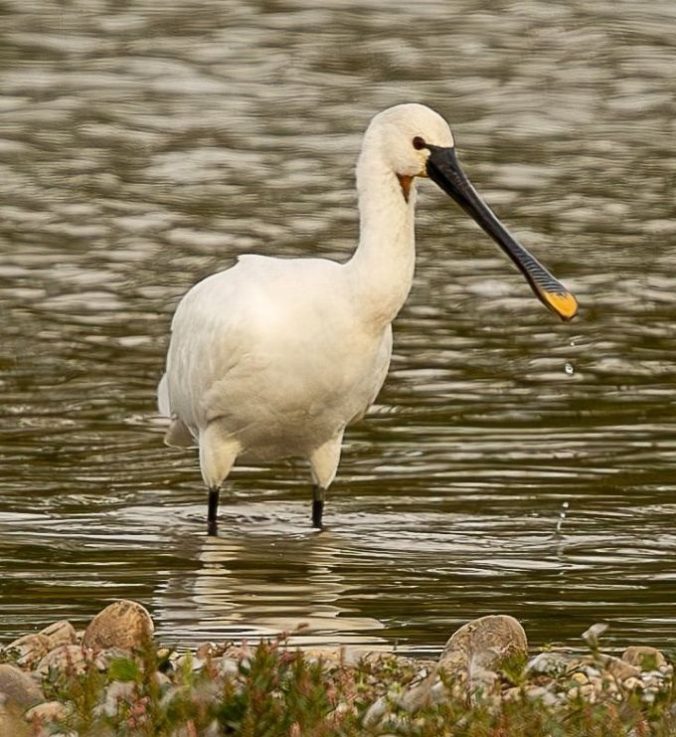
Today’s undoubted highlight was an adult Spoonbill found early morning on Car Park Pool and present all day. Also new in was an eclipse drake Pintail which started on Car Park Pool before moving to Railway Pool. The adult Greater Black-backed Gull roosted on the Car Park Pool islands and round the margins were three Great White Egrets, two Little Egrets and seven Herons. There were also two Wigeon, two Snipe and a Kingfisher seen.
A further increase in Mute Swans saw the total reach 33 (27 adults and six juveniles). There were still five Egyptian Geese and other waders included singles of Green Sandpiper and Little Ringed Plover (a juvenile), whilst overhead, two Ravens, 17 Swallows and six Sand Martins made up the rest of the records.
Spoonbill – Photograph by Jason Lewis
6th September 2026
No records.
5th September 2026
Sunny spells, fresh south-westerly.
Increasing numbers of wildfowl comprised 686 Canadas, 601 Greylags, five Canada/Greylag hybrids, 30 Mute Swans, four Egyptian Geese, 37 Shoveler, 53 Gadwall, two Wigeon, 134 Mallard, 66 Teal and eight Tufted Ducks. The recent rain had made no appreciable difference to the water levels and Herons continued to patrol the margins, including nine Grey Herons, four Little Egrets and three Great White Egrets.
Waders, despite the low water levels, were limited to 41 Lapwing, three Snipe and a Green Sandpiper. Water Rails were seen or heard in the North Causeway Bay and the Reedbed and, at the last location, a Kingfisher was again present.
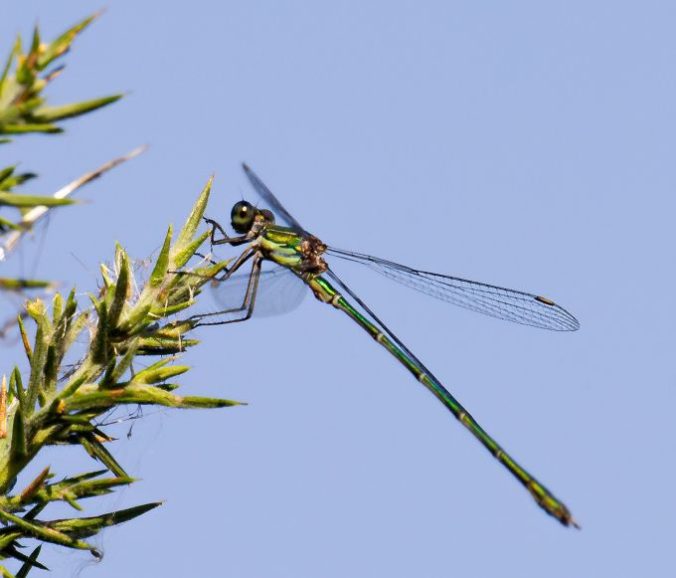
A Raven went over along with four House Martins and seven Swallows. There were still nine Willow Emeralds spread across the Reserve.
Willow Emerald Damselfly – Photograph by Stef Fraczek
4th September 2026
Overcast after early morning rain.
Yesterday’s juvenile Ringed Plover was still present, joining singles of Common and Green Sandpiper, five Snipe and three Great White Egrets.
A flock of 25 Goldfinches fed along the Old Road. A Mink was seen from Car Park Hide.
3rd September 2026
Sunny intervals, fresh south-westerly.
There was no sign of the Little Ringed Plovers this morning, but a juvenile Ringed Plover was new in and was present all day. There were over 1,000 mixed Canada and Greylag Geese, but probably of more interest were lingering warblers which included a Whitethroat in front of Railway Hide, Chiffchaff and Blackcap on the Causeway and at least three singing Cetti’s Warblers.
2nd September 2026
Rain.
One of yesterday’s juvenile Little Ringed Plovers was still present again this morning, joining a single Green Sandpiper, two Common Sandpipers, and nine Snipe.
Raptors included Hobby, Kestrel and a male Peregrine, and a further trickle of hirundines comprised six Swallows, two Sand Martins and seven House Martins.
1st September 2026
Sunny, fresh south-westerly.
The highest count of Willow Emeralds that I can recall was 14 today, all on the path to the ringer’s bridge. There was also a Clouded Yellow by the HS2 crossing.
Two House Martins, two Sand Martins and a Swallow were a rather poor return for thin hirundine passage, and birds should be piling through at this time of year.
Other counts care of Graham were 25 Mutes, 589 Canadas and 562 Greylags, along with two Canada/Greylag hybrids and two Egyptian Geese, 39 Shoveler, 37 Gadwall, two Wigeon, 190 Mallard, 76 Teal, 15 Tufted, 32 Cormorants, six Little Grebes, six Herons, six Little Egrets, three Great White Egrets, 18 Moorhen, 29 Coot, a Water Rail, 42 Lapwing, five Snipe, two Common Sandpipers, 59 Black-headed Gulls and three Lesser Black-backed Gulls. In the event, the Egyptian Goose count had increased to five and there were two Little Ringed Plovers new in, both juveniles.